The cuckoo, hobby, redstart, spotted flycatcher and pied flycatcher make extraordinary journeys from Africa to Britain each spring. If our recent article on spring migrants inspired you to go looking, here are ten of the best places in the Yorkshire Dales and surrounding area to find them.
The pied flycatcher didn’t feature in our spring migrants piece but deserves a place on any Yorkshire birder’s list. A dapper summer visitor from West Africa, it arrives in April and favours the same broadleaved woodlands as the redstart — making it a natural companion species on any of the woodland walks below.
A word on the hobby: the scarcest and most mobile of the five, it rewards patience and warm afternoons near open water. Historically less common in the north, it is quietly expanding its Yorkshire range as milder winters and springs allow dragonfly populations to increase earlier in the season.
The other species are more widespread. Early mornings in May, a good pair of binoculars and a sense of adventure, and any one of these locations will do the rest.
1. Grass Wood, Wharfedale

One of the largest areas of broadleaved woodland in the Dales, Grass Wood sits just a short walk up the valley from Grassington. Primarily hazel, sessile oak, birch and ash woodland growing across a series of limestone terraces, it’s a richly biodiverse site managed by Yorkshire Wildlife Trust since the 1960s — with open glades, exposed limestone and an extensive network of paths threading through both the upper and lower sections. The lower wood runs alongside the River Wharfe, making it as beautiful to walk as it is rewarding for birds.
Target species: Common redstart, spotted flycatcher, pied flycatcher
Grass Wood Lane, Grassington, North Yorkshire BD23 5FA — OS ref SD 98555 65102
2. Fairburn Ings, West Yorkshire

One of Yorkshire’s most surprising nature reserves, Fairburn Ings has undergone a remarkable transformation — from industrial coal workings to one of the region’s finest wetland habitats. Collapsed land is now open water, reedbed and wet woodland, and former spoil tips have become grassland and lagoon. Managed by the RSPB, the reserve sits between Leeds, Wakefield and York and is home to some of Britain’s rarest birds. The combination of open water, reedbed and woodland edge makes it ideal territory for the hobby, which hunts dragonflies over the lagoons on warm afternoons.
Target species: Hobby, cuckoo, common redstart
Newton Lane, Castleford, West Yorkshire WF10 2BH — OS ref SE451277
3. Hackfall Woods, near Ripon

Cut by the River Ure into a gorge some hundred metres deep, Hackfall is one of Yorkshire’s most atmospheric ancient woodlands — and one of its least known. Owned by the Woodland Trust across 112 acres of north-west facing slope, it’s a designated SSSI with restored features including grottos, waterfalls and rustic temples dating from its 18th century landscape garden past. A proliferation of woodland birds can be seen from the paths along the riverbank or along the wooded slopes. Bluebells carpet the floor in spring. Boardwalks, bridges and well-maintained paths make it accessible despite the dramatic terrain.
Target species: Cuckoo, common redstart, spotted flycatcher, pied flycatcher
OS ref SE236771 — Explorer 298
HG4 3DE. Free car park is located off the Masham Road.
4. Clapham Woods and Thwaite Scar, near Settle

Set within the national park, Clapham Woods occupy a narrow valley running north from the village of Clapham, through which runs Clapham Beck. Rich in songbirds and rhodedendrons, the wooded valley is bordered by open sheep pasture, dry-stone walls and limestone scree, dominated on the eastern side by the limestone ridge of Thwaite Scar — fine hunting terrain for raptors. Permissive footpaths run along both sides of the valley, and the Old Sawmill Café offers refreshments at the trail entrance. A small toll is payable to access the woodland walks. Well worth an early morning visit for the dawn chorus before the paths become busy.
Target species: Common redstart, cuckoo, spotted flycatcher
Clapham, near Settle, BD24 9FN — OS ref SD 81742 63678
5. Ingleton Waterfalls Trail

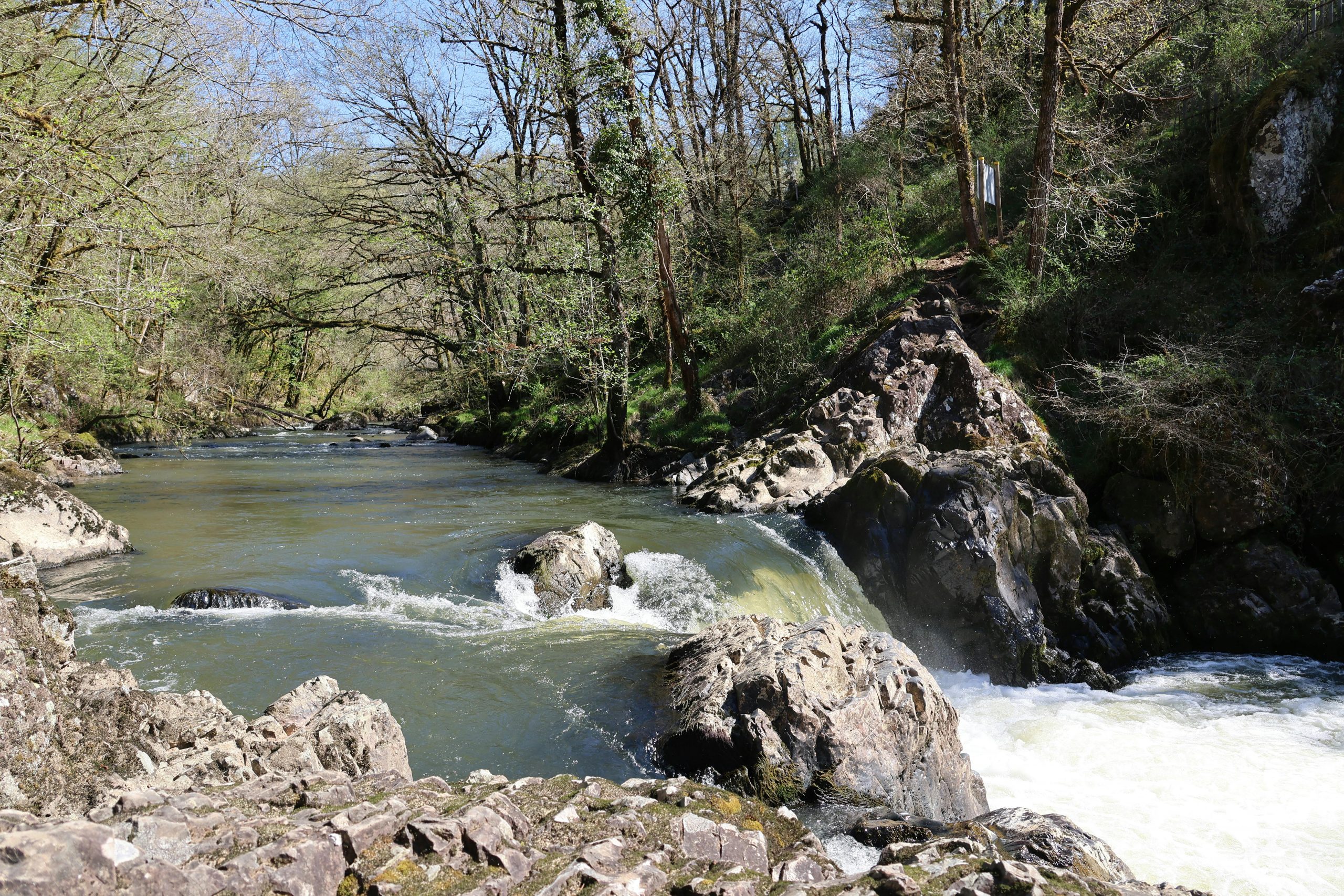
One of Yorkshire’s finest walks combines spectacular waterfall scenery with exceptionally rich woodland birding. The four and a half mile trail follows the rivers Twiss and Doe through thickly wooded ghylls for much of its length, with the oak woodland section along the River Doe particularly productive for flycatchers. Redstarts nest and breed here in relative abundance — this is one of the more reliable sites in the region for the species. A designated SSSI for its geology and rare plant life, the trail is well maintained and open year round.
Target species:Common redstart, cuckoo, pied flycatcher, spotted flycatcher (pictured)
Broadwood Entrance, Ingleton, Carnforth LA6 3ET — open daily 9am-7pm April-August
Village/Start Point: SD 693 732
6. Wass Bank Woods and Byland Abbey, near Thirsk

Eight miles east of Thirsk on the south-facing slopes of the Hambleton Hills, Wass Bank Woods comprise a large expanse of mixed woodland above the village of Wass, with the atmospheric ruins of Byland Abbey — a startlingly beautiful Cistercian site — sitting in the sheep pasture below. A walk through Elm Hag Wood in early morning should produce most common resident passerines alongside spring migrants. Hobbies have been recorded here in recent years, drifting over the nearby hills and woodland edge. The nearby Abbey Inn is one of Yorkshire’s finest pubs if you’re making a day of it.
Target species: Common redstart, cuckoo, hobby, spotted flycatcher
Wass, near Thirsk, YO61 4BD — OS ref SE 54657 78513
7. Heber Ghyll, Ilkley

Where the Yorkshire Dales meets the edge of Ilkley Moor, Heber Ghyll is a diverse area of mature deciduous woodland with scattered Scots pine, criss-crossed by footpaths over a stream via rustic bridges. It abuts the open moorland to the north — and it’s that woodland-moorland edge that makes it particularly productive. This is one of the better sites in the region for common redstart, and from mid April through June cuckoos are often present in the stands of trees along the moor edge. Accessible from Heber Ghyll Drive in Ilkley.
Target species: Common redstart, cuckoo, pied flycatcher, spotted flycatcher
Heber Ghyll Drive, Ilkley, LS29 9QH — OS ref SE 10952 47348
8. Langstrothdale — Oughtershaw and Nethergill Farm

The upper reaches of the River Wharfe cut through a landscape of wet meadow, rising fell and moorland edge. Follow footpaths beside the young Wharfe from Oughtershaw, through the valley to Nethergill Farm, where a bird hide and nature barn sit within traditionally managed grassland rich in flora and fauna. Listen for the cuckoo from mid April — this is one of the most reliable places in the Dales to hear it. Redstarts nest in the pockets of wooded areas and spotted flycatchers may be found around the mature trees at Yockenthwaite and Nethergill. Watch also for red squirrels, dippers and herons along the river.
Target species: Common redstart, cuckoo, spotted flycatcher
Nethergill Farm, Oughtershaw, Buckden, Skipton BD23 5JN — OS ref SD 8610 8219
9. Sutton Bank and Garbutt Wood, near Helmsley

Six miles east of Helmsley, the precipitous west-facing escarpment of the Hambleton Hills offers one of Yorkshire’s most dramatic viewpoints – the famous White Horse of Kilburn cut into the hillside nearby. Below the cliffs, the wooded slopes of Garbutt Wood hold most resident woodland bird species alongside spring and summer visitors, with April and May the prime months for enjoying song birds. Raptors including the hobby are known to drift south along the west-facing slopes, making this one of the more reliable sites in the region for the species. A lake near Roulston Scar adds further habitat variety.
Target species: Common redstart, spotted flycatcher, cuckoo, hobby
Sutton Bank National Park Centre, YO7 2EH — OS ref SE 507 833
10. Spa Gill Wood, Grantley, near Ripon

Public rights of way thread through an extensive strip of mature woodland either side of the River Skell upstream from Fountains Abbey. Mature beech, alder, stands of conifers and areas of boggy riverside attract a rich variety of birds throughout the year. From mid April this is an excellent site for both pied flycatcher and common redstart. The wooded valley also passes the ruins of Aldfield Spa, where visitors from the late 1600s sought the healing properties of its sulphur spring. Another location where history and birding go hand in hand.
Target species: Common redstart, cuckoo, pied flycatcher, spotted flycatcher
Grantley Village Hall car park, HG4 3PJ — OS ref SE 259 686
For the full story of where these birds come from and the extraordinary journeys they make to reach Yorkshire each spring, read our companion article…” Four Epic Journeys: The Spring Migrants That Herald the British Summer


